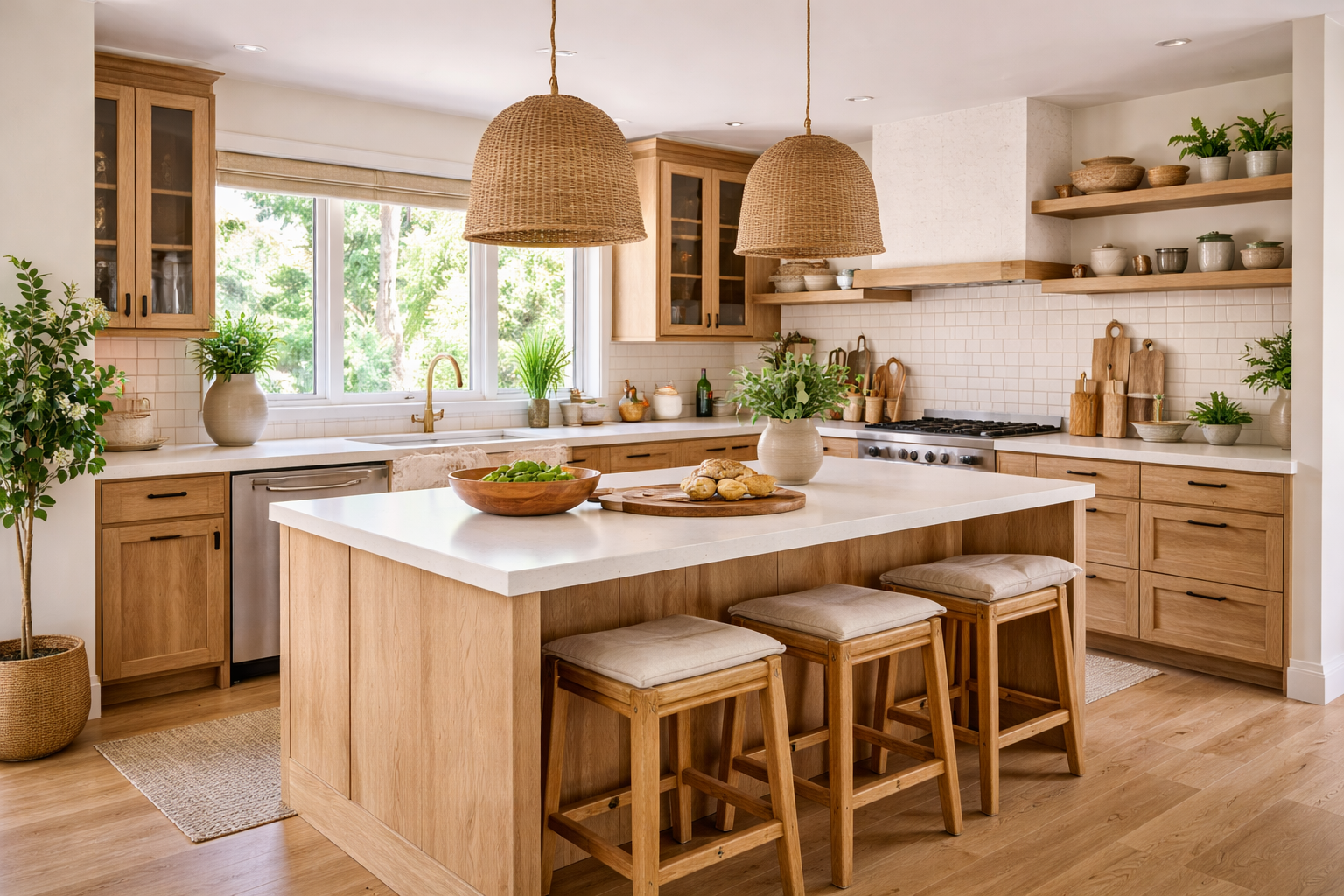
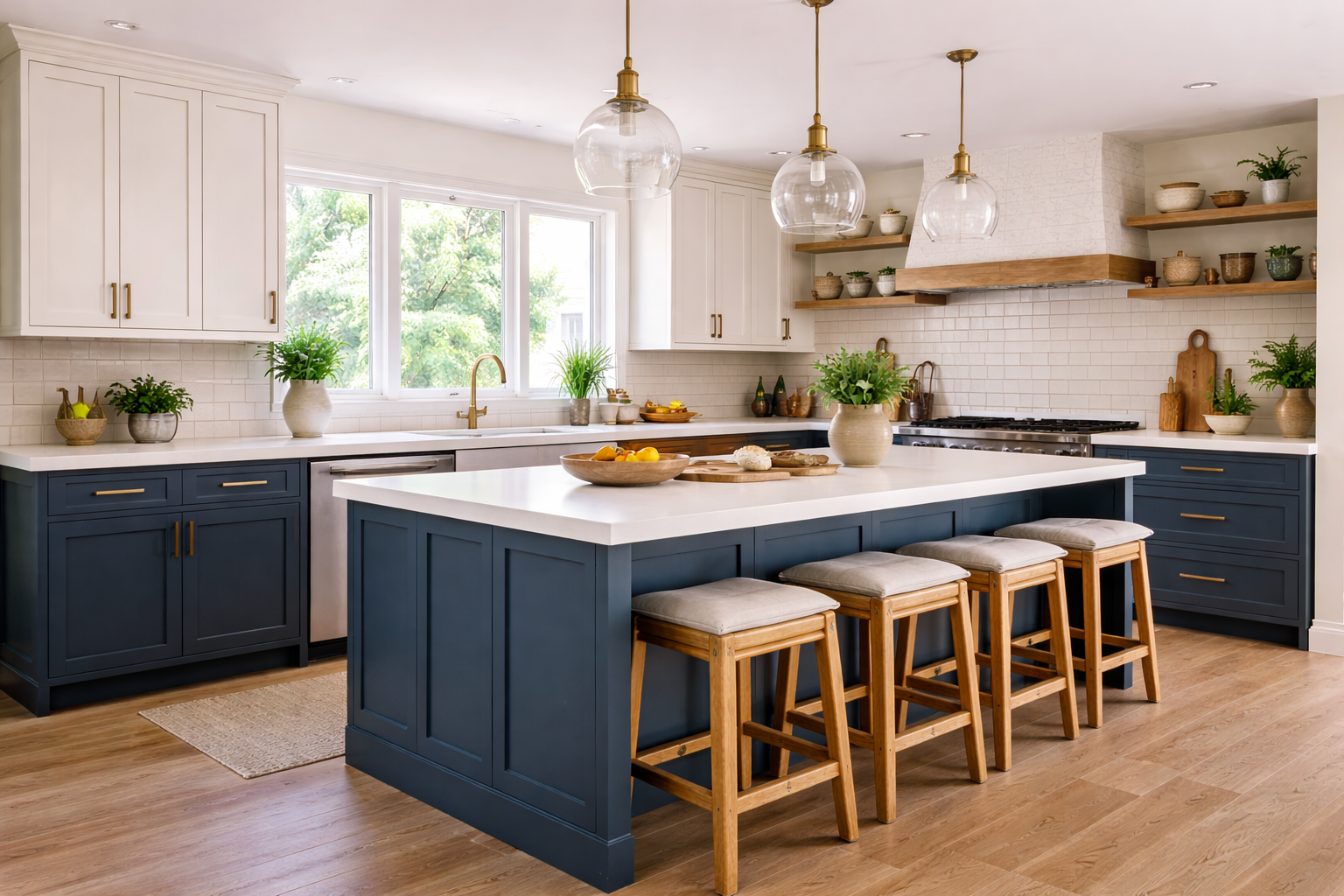
If your kitchen feels flat or a little too uniform, there is a simple design upgrade that can completely transform the space without a full remodel. Two-tone cabinetry has become one of the most popular kitchen design trends in recent years, and for good reason.
Instead of using one cabinet color throughout the entire kitchen, this approach blends two complementary finishes. The result feels layered, modern, and visually interesting without being overwhelming.
Let’s explore why two-tone cabinetry works so well and how you can use it in your own kitchen.
What Is Two-Tone Cabinetry?
Two-tone cabinetry simply means using two different colors or finishes for your kitchen cabinets. This usually involves pairing lighter upper cabinets with darker lower cabinets, or using a contrasting color on the island.
For example, you might see:
-
White upper cabinets with navy lower cabinets
-
Natural wood base cabinets paired with soft gray uppers
-
A bold black island with warm white perimeter cabinets
The contrast adds dimension and prevents the kitchen from looking too one note.
Why Two-Tone Cabinetry Is So Popular
Kitchen design trends are shifting toward personalization and warmth. According to interior design industry reports, homeowners are increasingly looking for ways to add character without sacrificing timeless appeal.
Two-tone cabinetry achieves that balance. It introduces contrast while still maintaining cohesion. Instead of one dominant color, the eye moves naturally around the room.
This approach also helps visually anchor the space. Darker lower cabinets ground the kitchen, while lighter upper cabinets keep it feeling open and airy.
Smart Ways to Use Two-Tone Cabinetry
There are several ways to incorporate two-tone cabinetry depending on your layout and style.
Upper and Lower Contrast
This is the most common approach. Keep upper cabinets light to reflect natural light, and choose a richer shade for the lower cabinets to hide wear and add depth.
Island Accent
If you prefer a more subtle look, keep all perimeter cabinets one color and use a contrasting shade on the island. This makes the island feel like a statement piece without overwhelming the space.
Mixed Materials
Two-tone cabinetry does not always mean two paint colors. You can pair painted cabinets with natural wood finishes. For example, white cabinets with walnut lower cabinets create warmth and texture.
Choosing the Right Color Combinations
The key to successful two-tone cabinetry is balance. You want contrast, but you also want harmony.
Some popular combinations include:
-
White and navy
-
Cream and sage green
-
Charcoal and light gray
-
Natural oak and soft white
When selecting colors, consider your countertops, backsplash, and flooring. All elements should work together rather than compete.
If your kitchen receives a lot of natural light, you can experiment with deeper tones. In smaller kitchens, lighter upper cabinets help maintain an open feel.
Practical Benefits Beyond Style
Two-tone cabinetry is not just about aesthetics. It also offers practical advantages.
Darker lower cabinets can better conceal scuffs, spills, and everyday wear. Lighter upper cabinets prevent the room from feeling heavy or closed in.
Additionally, using two tones can help define zones in open concept homes. For example, a bold island color can subtly separate the kitchen from the living area without adding walls.
Avoiding Common Design Mistakes
While two-tone cabinetry is versatile, there are a few things to keep in mind.
Do not choose colors that clash with your countertops or backsplash. Always test samples in your actual lighting before committing.
Avoid extreme contrast unless you are confident in the overall design. For a timeless look, stick to classic shades and subtle variation rather than trendy, short lived colors.
Hardware also plays a role. Matte black, brushed brass, or stainless steel can tie both cabinet tones together.
Is Two-Tone Cabinetry Right for You?
If you want a kitchen that feels layered, modern, and customized, two-tone cabinetry may be the perfect choice.
It works especially well if:
-
You want to add visual interest without major structural changes
-
Your kitchen feels too monochromatic
-
You are updating cabinets but keeping your existing layout
-
You like a blend of classic and contemporary styles
Even small kitchens can benefit from this approach when the color balance is handled thoughtfully.
Final Thoughts
Two-tone cabinetry is more than just a passing trend. It is a smart design strategy that adds depth, personality, and visual balance to your kitchen. By carefully selecting complementary colors or finishes, you can create a space that feels both fresh and timeless.
If you are planning a kitchen update, consider how contrast can work in your favor. A simple shift in cabinet color placement might be all you need to transform the heart of your home.