Have you ever noticed a damp smell, water stains, or even small puddles in your basement? It might not seem like a big issue at first, but moisture problems can quickly turn into serious damage if ignored. That is where basement waterproofing becomes essential.
A dry basement is not just about comfort. It protects your home’s structure, improves air quality, and prevents costly repairs in the future. The good news is that with the right approach, you can manage and prevent these issues effectively.
What Is Basement Waterproofing
Basement waterproofing refers to the process of preventing water from entering your basement. This includes using different methods and materials to keep moisture out and protect the foundation of your home.
It can involve both interior and exterior solutions, depending on the severity of the problem.
Why Basement Waterproofing Is Important
Ignoring moisture issues can lead to bigger problems over time. Basement waterproofing helps protect your home in several ways.
Prevents structural damage
Water can weaken your foundation and lead to cracks over time.
Improves indoor air quality
Moist environments encourage mold growth, which can affect your health.
Increases property value
A dry and well-maintained basement adds value to your home.
Reduces repair costs
Fixing water damage later is often more expensive than preventing it now.
Common Signs You Need Basement Waterproofing
It is important to recognize the early signs before the problem gets worse.
- Damp or musty smell in the basement
- Visible cracks in walls or floors
- Water stains or discoloration
- Mold or mildew growth
- Peeling paint or bubbling walls
If you notice any of these signs, it may be time to consider basement waterproofing.
What Causes Basement Moisture Problems
Understanding the cause helps you choose the right solution.
Poor drainage
Water collecting around your home can seep into the basement.
Heavy rainfall
Excess rain increases pressure on your foundation.
Foundation cracks
Even small cracks can allow water to enter.
High groundwater levels
Water from below can rise into your basement.
Improper grading
If the ground slopes toward your house, water will naturally flow inside.
Types of Basement Waterproofing Solutions
There are several ways to protect your basement depending on the situation.
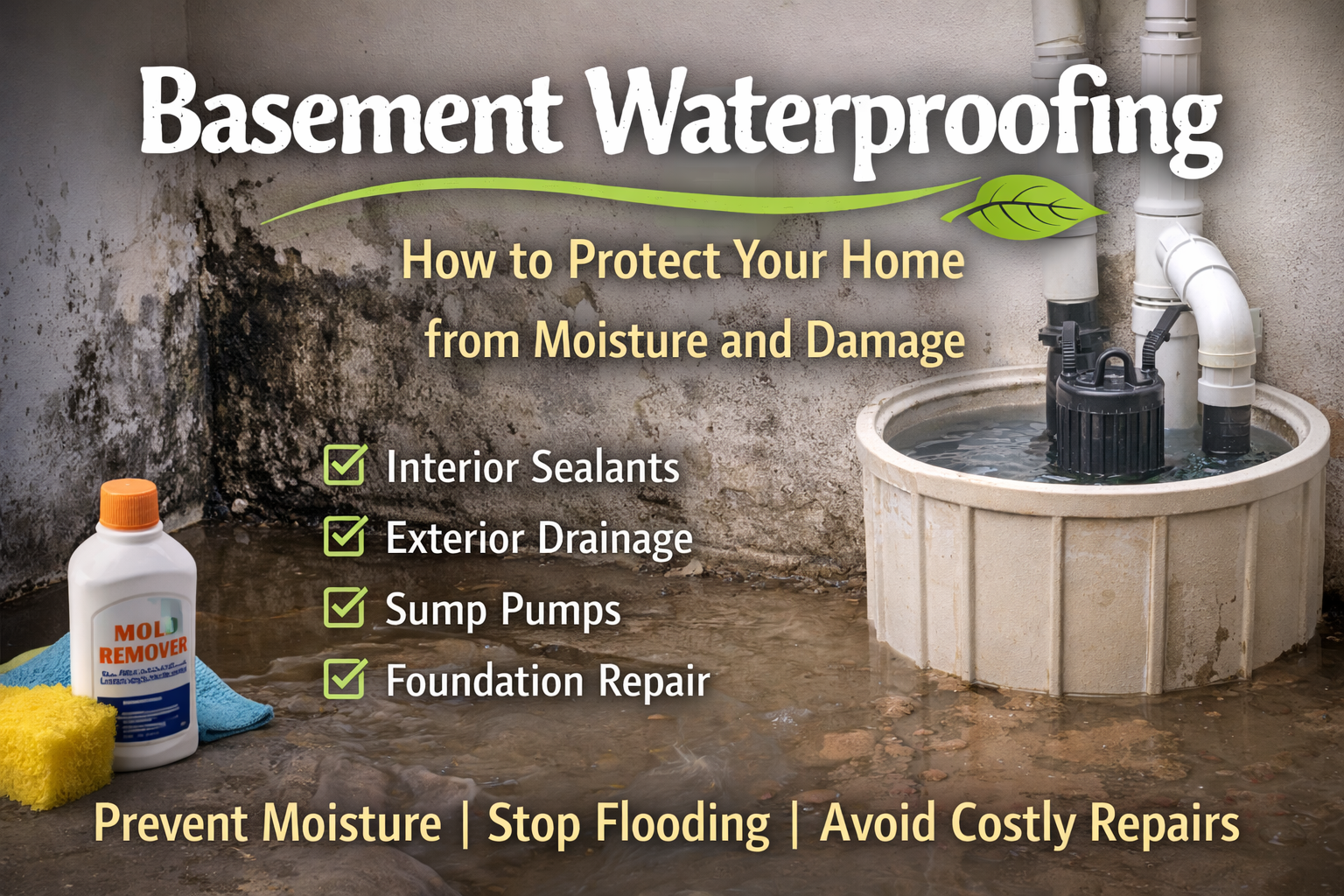
Interior waterproofing
This includes sealants, coatings, and drainage systems inside the basement.
Exterior waterproofing
This method involves sealing the outside of the foundation and improving drainage.
Drainage systems
Installing systems like French drains helps redirect water away from your home.
Sump pumps
These pumps remove water that collects in the basement and prevent flooding.
A Useful Insight
According to the American Society of Home Inspectors, more than 60 percent of homes in the United States experience some form of basement moisture. This shows how common the problem is and why basement waterproofing should not be overlooked.
Tips to Prevent Basement Water Issues
Prevention is always better than dealing with damage later.
- Clean gutters and downspouts regularly
- Ensure proper grading around your home
- Seal small cracks early
- Install a sump pump if needed
- Avoid letting water pool near your foundation
Simple maintenance can make a big difference.
Final Thoughts
Basement waterproofing is one of the most important steps you can take to protect your home. It keeps your space dry, prevents long-term damage, and creates a healthier living environment.
By understanding the causes and taking preventive action, you can avoid costly repairs and enjoy peace of mind knowing your home is well protected.